
Introduction
Many mid-sized 3PLs reach a point where the founder or owner has built the business through relationships, responsiveness, and sheer effort. That approach works for a long time, but eventually growth creates pressure.
More customers means more quotes, more carriers, more follow-up, more service issues, and more moving pieces to keep track of. At a certain point, too much of the business is living in email inboxes, spreadsheets, and in the heads of a few key people.
That is where a CRM starts to become a serious operational advantage.
This case study is based on common challenges I see in the 3PL space. While every company is different, the patterns are very similar. A well-designed CRM helps bring structure to the sales process, improve customer visibility, support operations, and create a stronger foundation for growth.
The Situation: Growth Starts to Expose Process Gaps
A growing 3PL usually does not have just one type of customer relationship to manage.
There is the paying customer, but that is only part of the picture. There are also shippers and consignees, and both of those relationships matter. If the shipper or consignee has a poor experience, the paying customer is not going to stay happy for long.
At the same time, carriers are a critical part of the business and need to be managed like strategic relationships as well. Their qualifications, insurance, licensing, service history, and lane performance all affect the quality of the service being delivered.
As the company grows, several problems usually start to show up:
- Sales follow-up depends too much on memory and individual effort
- Customer information is fragmented across email, spreadsheets, and accounting or TMS systems
- Quotes become difficult to track and retrieve
- Carrier documentation and reviews are hard to manage consistently
- Claims and service issues are handled manually and reactively
- Marketing and relationship follow-up happen inconsistently
- Onboarding new customers and carriers becomes harder to track across multiple steps
This is especially common in founder-led 3PLs where the owner has historically been the hub of most relationships. Once that owner wants to step back from personally driving every opportunity, the business needs systems that support a sales team and create visibility across the organization.
The Challenge: Managing Multiple Relationship Types in One Business
One of the biggest reasons CRM is valuable in logistics is that a 3PL does not operate with a simple buyer-seller relationship.
A typical 3PL may need to manage:
- Paying customers
- Shippers
- Consignees
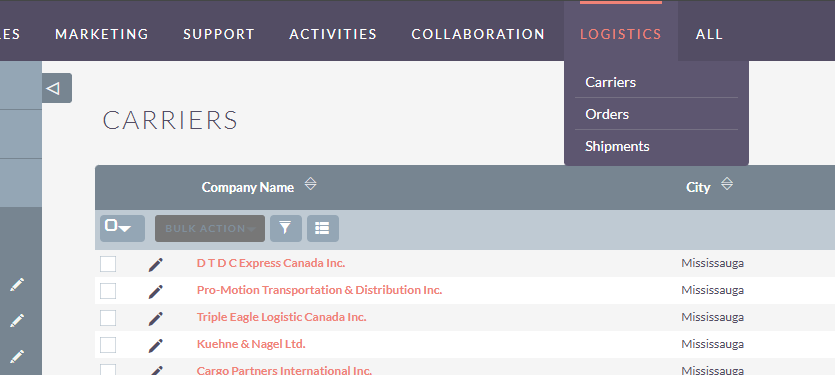
- Carriers
- Internal sales staff
- Operations and billing coordination
Each of those groups has different needs, different touchpoints, and different business value.
A CRM makes it possible to organize those relationships clearly and maintain visibility into who is connected to whom. That matters for sales follow-up, issue resolution, quoting, service quality, and future business development.
For example, a shipper or consignee may not be the one paying the invoice, but they still strongly influence retention and future opportunities. Without a CRM, those relationships are often under-managed because they do not fit neatly into a standard accounting system.
The Solution: A CRM Built Around the Real Workflow of a 3PL
A CRM for a 3PL should not just act as a digital address book. It should reflect the actual workflow of the business.
That includes sales, relationship management, carrier onboarding, quoting, service follow-up, claims, and ongoing communication.
Here are some of the ways a CRM can solve real problems inside a 3PL.
1. Clear visibility into all customer relationships
A CRM can distinguish between the paying customer, shipper, and consignee while still tying them together in a meaningful way.
This gives the sales team and leadership a much clearer picture of the full account relationship. It also helps ensure follow-up is not focused only on the paying customer while other important contacts are ignored.
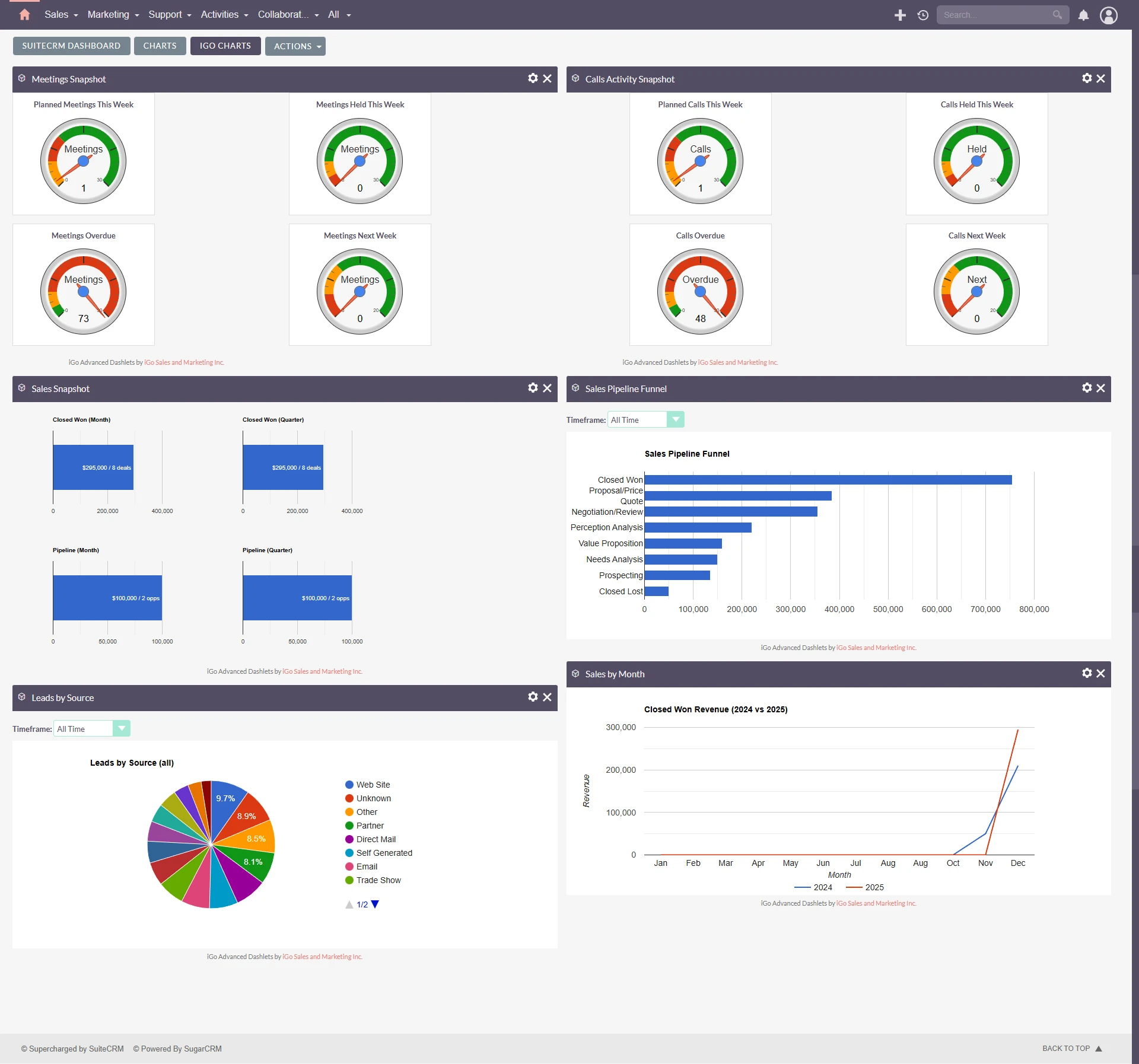
It also creates a much better foundation for deal management. In a growing 3PL, opportunities can easily get stuck in someone’s inbox or live only in the owner’s head. A CRM makes it possible to track deals through a defined sales process, assign next steps, and give leadership visibility into what is moving, what is stalled, and what needs attention. This is especially powerful when paired with a visual opportunity Kanban, which lets the sales team and leadership quickly see pipeline activity by stage and manage follow-up more proactively.

Key sales statistics and management reports are also available in real time that help Sales Managers manage the sales operations function. This gives owners and the executive team real time funnel visibility.
2. Better carrier relationship management
Carriers are not just vendors. They are a core part of the service delivery model.
A CRM can centralize carrier records, qualifications, review notes, service history, lanes serviced, and related documentation. Instead of scattered files and tribal knowledge, the team has one place to access the information they need.
3. Tracking carrier insurance, licensing, and due diligence
Keeping insurance certificates, licensing, and other compliance-related documents current is a constant requirement.
A CRM can automate reminders, track renewal dates, and create workflows to request updated documents before they expire. This reduces manual follow-up and lowers the risk of missing something important.
4. Claims management through case workflows
Claims are one of the most frustrating and time-consuming parts of logistics. A CRM can manage claims as structured case records with statuses, ownership, timelines, and escalation rules.
That makes it much easier to flag claims that are out of tolerance, follow up consistently, and maintain accountability across the process.
5. Quote management at scale
For many 3PLs, quotes are a major operational and sales function. There may be thousands of open quotes across different lanes, freight sizes, service types, and pricing conditions.
A CRM can keep those quotes searchable, organized, and visible to sales, operations, and billing. Instead of digging through email chains or spreadsheets, the team can quickly find the right quote and understand its status.
6. Connecting quotes to carriers and lane data
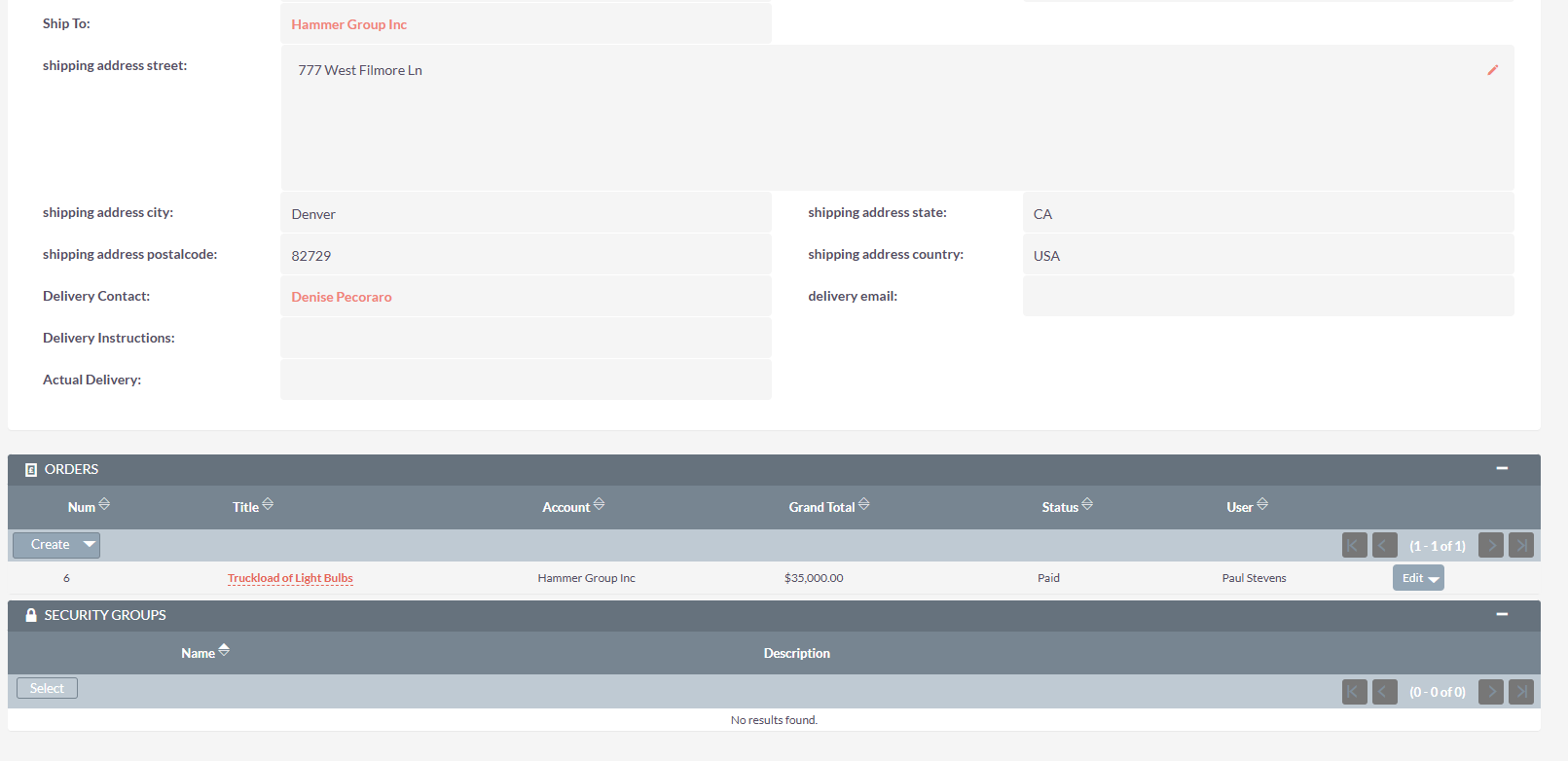
One of the biggest advantages of a customized CRM is the ability to connect quotes to the carriers who service a lane or who provided the underlying rate information.
That gives operations much better visibility into how a quote was built and what options are available when a shipment needs to move. It also creates a stronger historical record for future quoting and pricing decisions.
7. Marketing automation for relationship development
In many 3PLs, there is a lot of value in staying in touch with shippers and consignees even when they are not immediately buying.
A CRM can support targeted marketing automation that keeps these relationships warm through useful updates, service announcements, and ongoing follow-up. That makes future sales conversations easier and helps the company stay top of mind.
8. Managing pricing updates and fuel surcharge announcements
Operational updates like fuel surcharge changes and pricing notices are important, but they are often handled inconsistently.
A CRM makes it easier to segment contacts, send timely announcements, and maintain a record of what was sent and when. This improves communication and reduces the risk of key contacts missing important updates.
9. Structured onboarding for new customers and carriers
Onboarding is often more complex than it looks. A new client may involve credit checks, referral validation, service setup, and internal handoffs. A new carrier may involve licensing checks, insurance verification, references, and qualification review.
A CRM can turn onboarding into a trackable process with stages, checklists, tasks, reminders, and automation. This makes it easier to manage, easier to delegate, and much less dependent on one person remembering every step.
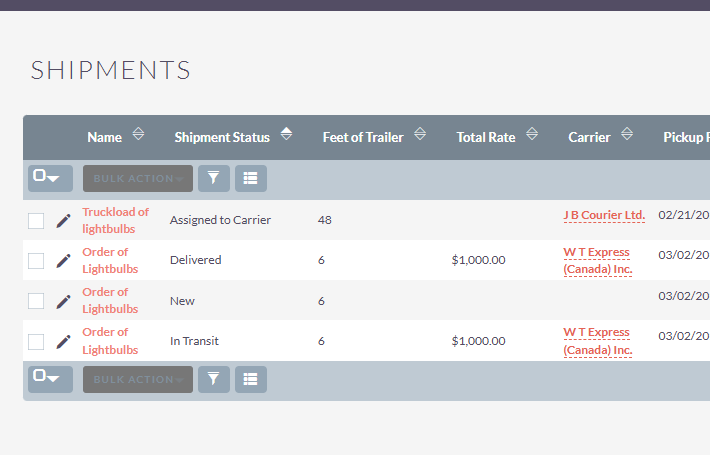
10. Load tracing and workflow automation
A CRM can also support automation around load tracing, status follow-up, and exception visibility when integrated properly with the rest of the business process.
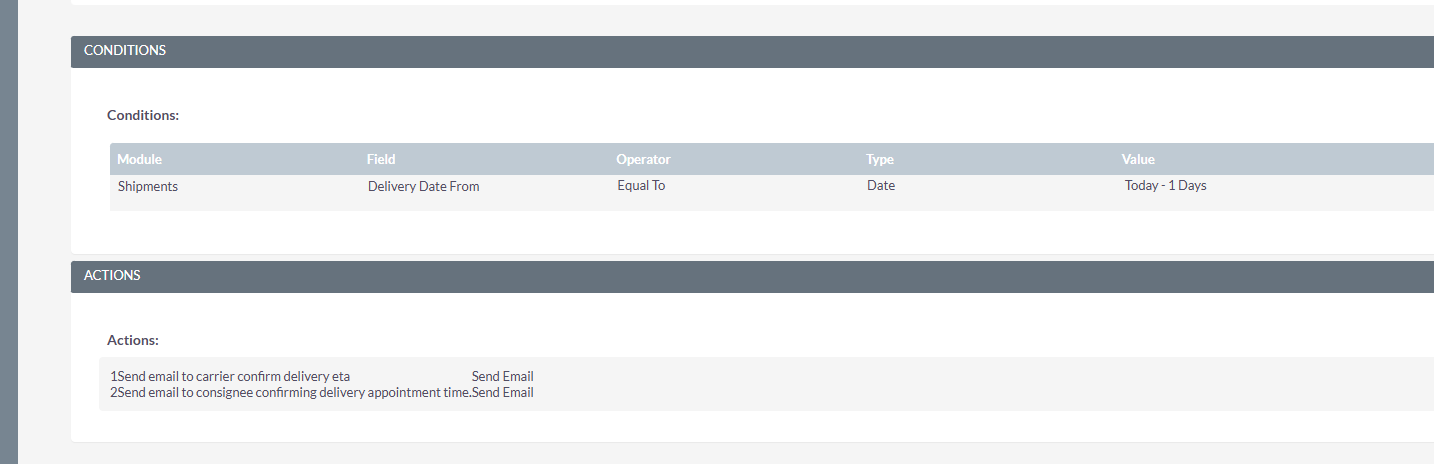
This does not mean the CRM replaces every logistics system, but it can become the central relationship and workflow hub that gives the business a more complete operational picture.
The Business Impact
When a 3PL moves from scattered processes to a well-structured CRM, the biggest improvement is usually not just better data. It is better control.
Leadership gains visibility. Sales follow-up becomes more consistent. Operations can find what they need faster. Customer and carrier onboarding becomes more repeatable. Claims and service issues are easier to track. Important relationships stop living only inside individual inboxes and memories.
For a founder-led business, this is especially important.
A CRM helps move the company from owner-driven hustle to team-based process. That does not remove the relationship side of the business. It supports it.
The owner can still lead sales and strategy, but the company no longer depends on one person to remember every quote, every carrier issue, every follow-up, and every account detail.
That is a major step toward scale.
Why SuiteCRM Is a Strong Fit for 3PLs
One of the reasons I like SuiteCRM for this kind of work is that it is both highly customizable and practical for real-world businesses.
Many 3PLs do not need a massive enterprise CRM rollout with huge license fees and a rigid structure that does not match how they actually operate. They need a system that can be tailored to their process and grow with them.
SuiteCRM is a strong fit because it can be adapted around the way a 3PL really works, including custom relationship types, quoting workflows, case management, onboarding processes, and automation.
AI Applications for a Modern 3PL
This is also where AI starts to become very practical for a 3PL. Once the CRM is structured properly, AI agents can help review records, spot issues, recommend actions, and reduce a lot of the manual effort that slows the business down.
For example, AI can assist with carrier qualification by reviewing documentation, flagging missing items, and helping the team prioritize which carriers are ready to onboard. AI can also support claims processing by reviewing case details, identifying claims that may need escalation, and helping ensure that issues do not sit too long without attention.
Billing is another major opportunity. In many 3PL environments, invoicing depends on matching the order, the bill of lading, and the carrier invoice before the customer invoice can be sent. That is a time-consuming process when handled manually. With the right CRM structure and integrations, AI can help review those documents, identify mismatches, and highlight exceptions for human review so the billing team can work faster and with better accuracy.
AI can also support carrier selection and rate suggestions. An AI agent can review historical shipment data, carriers who previously serviced a lane, service areas, past performance, and even real-time load posting data to suggest which carriers may be the best fit to contact for a shipment. Instead of relying only on memory or habit, the team gets an AI-assisted recommendation based on a scoring model built around actual business data.
Open shipments can also be reviewed on a regular basis by AI to identify possible service risks. For example, an AI-driven workflow could flag loads that may be at higher risk due to carrier rating, prior service issues with a shipper or consignee, or load tracking activity that suggests a potential problem. That gives operations a chance to act earlier instead of only reacting after the customer feels the impact.
About SuiteCRM
SuiteCRM is a free and open source CRM platform. That means there are no per-user license fees just to use the software, and the system can be customized to match the business instead of forcing the business to adapt to a closed platform.
For companies that want flexibility, ownership of their data, and the ability to build around their actual workflow, that is a major advantage.
Open source does not mean limited. In the right hands, it means adaptable.
How iGo Helps 3PLs
At iGo Sales and Marketing, I help businesses design and implement CRM systems that support real sales and operational workflows.
For 3PLs, that means looking beyond a generic contact database and building a CRM structure that supports:
- Sales follow-up and pipeline visibility
- Management of paying customers, shippers, and consignees
- Carrier relationship tracking and qualification
- Claims and service issue workflows
- Quote visibility and accessibility
- Onboarding process management
- Marketing automation and account communication
- AI workflows for business processes
The goal is not to force a 3PL into a cookie-cutter CRM. The goal is to create a practical system that supports growth, improves visibility, and helps the owner build a stronger sales and service organization.
Conclusion
A CRM is not just a sales tool for a 3PL. It can become the central system for managing relationships, process, accountability, and growth.
When implemented properly, it helps connect the dots between sales, operations, billing, customer service, and carrier management.
For a mid-sized 3PL that has grown through hustle and relationships, that can be the difference between staying reactive and building a more scalable business.
That is where the right CRM, and the right implementation approach, can create real value.
Need help implementing or improving SuiteCRM?
I provide SuiteCRM consulting, customization, implementation, and support services to help businesses get more value from their CRM.